Wednesday, March 18, 2015


COLLATERAL LITERATURE

You're right. Immediately after a trade show, countless product brochures become trash-can liners, as attendees lighten their loads before their flights home. And that's exactly why many exhibitors have switched to electronic product catalogs. Indeed, digital brochures certainly eliminate print-production costs, and they decrease weight-based shipping and drayage fees; plus, electronic communication is the medium of choice for some attendees.

However, printed magazines and books still exist for a reason: Not everyone favors digital data. Some people simply prefer the tactile experience of holding a piece of paper while others like to jot down notes in a catalog or add sticky notes to important pages. Plus, booth visitors often enjoy sharing their trade show treasures with colleagues without having to fire up a tablet or squint at tiny images on a smartphone.

So paper still has its place. But there are two reasons why it's gotten a bad rap: 1) unqualified distribution, and 2) a lack of creative vision. Here are some ways to deal with both of these problems.

Unqualified Distribution
Luckily, the first issue is fairly easy to solve. Just as you likely shouldn't hand out high-value tchotchkes to every person that wanders by your booth, you need not offer everyone a glossy, premium-paper brochure either. In both cases, you need to qualify potential recipients before you decide what, if anything, to distribute to them. Now that's not to say that every attendee has to be an A lead before you fork over a folder. But a certain level of interest or buying intent should be present before a booth visitor gets a hold of your literature.

Store your brochures out of sight in your booth and set up some distribution parameters for the staff. For example, instruct staffers that they can only give out your brochure after they've spent a minimum of five minutes talking with an attendee, they've assessed that this person has a high level of interest, buying power, and immediate intent (or whatever qualifiers you choose), and/or the person has specifically asked for literature.

Also consider creating two types of handouts. For less-qualified booth browsers, you might place several low-cost one-sheet options in plain view in your booth. Then you could position glossy, multipage pamphlets in a concealed location and only distribute them to qualified attendees with high purchasing authority and interest levels.

Creative Vacuum
So the first key to using literature effectively in your exhibit is to pair its distribution with attendee qualification. The second, then, is to hand out something worth keeping. You need to give attendees a reason, over and above product information, to hang onto your handout – because most people can, and should, get detailed product information online.

That reason, then, usually has little to do with the content of the handout and more to do with its delivery medium. Here's where your creative vision comes into play. Rather than handing out a traditional product sheet or brochure, ask yourself: How else could we distribute the same information in a memorable or at least nontraditional manner? To get your wheels turning, here are some options that will rarely go straight to the inside of a dumpster.

Shapes and Textures – Traditional literature is printed on flat sheets of paper with square corners. Simply changing the shape of the piece or the texture of the paper can help it stand out. For example, if your company offers cloud-computing services, create a brochure shaped like a cloud and make the cover out of a soft cotton-like material. Or, for your one-sheet handout featuring sale prices, design a red, sales-tag-shaped piece, perhaps even with a hole at the top and a string tied through it. And what if the cover of your brochure was actually a piece of sandpaper? This texture could tie into messages about product durability or how your company smoothes out attendees' problems. Bottom line, to give your literature staying power, think beyond the strict confines of stock paper and square shapes.

Pop-ups – This technique is often found in greeting cards. When you open such a card, a 3-D image or word "pops" off the card interior. Why not create a product handout or a couple of pages of your brochure that pop off the page and surprise and delight recipients? Or if you want to get fancy, add one of those musical greeting-card chips, but load it with product messages instead of tunes.

Multifolds and Interactives – Most brochures have a linear progression from the front of the literature to the back. But what if your handout folded accordion style or maybe like a travel map? Or what if you gave attendees a flat piece of paper that when folded according to directions created an origami crane covered with product information? Some companies also offer slide-show-like books with a tab on the side. When the tab is pulled out almost like a tape measure, additional pages emerge from inside a hidden flap. While attendees may have seen these techniques before, they've rarely seen them used in conjunction with trade show exhibits.

Scratch-Offs and Pull Tabs – You don't need a gaming license to hit it big with pull tabs and scratch-off cards. In their simplest form, these items can be branded with your company's information, and attendees can scratch or pull to reveal product info or messages. But what if you integrated the concept into a large brochure or handout? For example, you could place a small scratch-off square on the front cover of a large brochure. Then, text could instruct people to scratch off the square after the show and to visit your company's website to see if they'd won a prize, such as a percentage discount on their next purchase, an electronic component, or even a high-dollar giveaway such as a motorcycle. This tactic could help ensure that most of your handouts stay with attendees long after the show has closed – or at least until they can scratch off the square to see if they've won.

Nontraditional Objects – If you want to take your literature even farther outside of the box, consider printing your product info on unexpected items, such as paint cans (the labels can be easily custom printed and applied), Chinese takeout and pizza boxes (you can print the flat boxes and then fold them into their unique shapes at the show), etc. Or, create a handout that looks like an everyday item. For example, design product pamphlets that look like airline-ticket jackets, menus, movie tickets, cash-register receipts, etc.

So as you can see, traditional trade show literature doesn't have to be traditional at all. If you devise a handout that stands out amid the stacks, and you develop a distribution system based on lead quality, you can greatly decrease the chances of it landing in a landfill – and increase the probability of it taking up long-term residence on attendees' desks.

— Dan McAdams, vice president of marketing and sales, McAdams Graphics Inc., Oak Creek, WI

Collateral Literature- What can you do to ensure your company's literature makes it past the litter bins?

COLLATERAL LITERATURE You're right. Immediately after a trade show, countless product brochures become trash-can liners, as attendee...

Tuesday, March 17, 2015


The vast majority of in-booth interactions involve merely listening to attendees' needs and then relaying product information accordingly. But once in a while, exhibit staffers are bound to get a question that throws them out of their normal listen/respond rhythm. Depending on what's happening in your industry and your company, they could get queries about everything from how your product stacks up to the competition's new shiny bauble to why your brand just gobbled up one of the beloved industry little guys.

So in addition to preparing your staff to handle these awkward situations, you need to give them some down-and-dirty strategies to sidestep them as well. Here, then, is a primer on how to prepare for and respond to atypical questions in the booth.

1. Prepare. After each day of a show, ask staffers what odd questions they received from attendees, and create a list. This will help you keep a finger on the pulse of the industry and make some generalizations about what people are concerned about at the time. Then, devise appropriate answers for these tough questions, and others like them, seeking help from other people within your organization if necessary. Go over these questions and suitable answers or prescribed courses of action for each.

Furthermore, take a look at your company and industry to see if there's anything going on that might prompt new questions. For example, is one of your new products late to market or defective? Has a company executive recently made the news for improper behavior? Have stock prices plummeted, or are there industry rumors of an upcoming merger? Devise a list of potential questions and fitting answers and distribute these to your staff. By giving staffers a few examples of the questions they're likely to field in the booth, you'll help them mentally prepare for the onslaught and hopefully prevent any blank-stare responses.
Finally, encourage staffers to discuss oddball questions with each other and devise answers on the fly (with your assistance if necessary). If one attendee posed a tough query to your staff, chances are that other similar questions could be coming their way. Even if a staffer fudged the first response, there's no reason to get it wrong twice.

2. Master the handoff. Once in a while, attendees' queries are better answered by an executive or trained media professional in the booth. If you have these people on hand at the show, be sure your staffers are aware of who they are, how they can find them, and what type of questions should be directed their way. That way, tough questions can go straight to a booth staffer that's specifically trained to answer them.
And, if your company is indeed involved in some kind of scandal, merger, or "tricky" situation, consider sending someone to the show whose sole purpose is to address attendees' concerns. That way, you'll have one person with the right answer every time, so the rest of your staff can focus on traditional staffing duties.

3. Call their bluff. Some people are just jerks. They want to see staffers squirm, so they'll keep pounding away at them with rude comments and questions no matter how charming or informative the answers. In this case, it might be best for staff to respond to these questions with questions. Staff should ask attendees why they're posing these specific questions, and if there's some underlying issue they're not discussing.

Occasionally, these people do have an issue, which when ferreted out, can be solved or at least addressed. But if attendees are simply being jerks, responding to their question with a question will often disarm them and give staffers a little more time to formulate answers â?" or to bring other staffers into the conversation to render aid. Remember, though, staffers must always stay calm and be polite. Otherwise, they'll come off as defensive, and that could open a whole new can of worms.

4. Apologize. Often, a simple "I'm sorry that ..." is all attendees are looking for with their questions or complaints. They want a real human to step up to the plate and admit that the company or product somehow wronged them. After that happens, their steam usually dissipates, and they can move on.

So if someone or something related to your company has truly wronged the attendee, ask your staff to admit the error and apologize. But then move on. And if it turns out that there has merely been a misunderstanding, perhaps between a salesperson in the field and this attendee, your staff should take partial or full responsibility for it and do their best to clear up the misunderstanding. Most attendees just want to know what's really going on, and an explanation will often satisfy their needs. Again, as soon as possible, staff should redirect the conversation toward a positive topic. You don't want the attendee leaving your company's booth with a bad taste in his or her mouth.

5. Don't call out or criticize the competition. If you're exhibiting at the right shows, you're probably surrounded by competing companies.
As such, you can expect to get questions about how your product stacks up to the competition. But you're at the show to generate awareness for and interest in your products, not those of your competitors. Even mentioning competitors by name gives them unnecessary "airtime" with attendees.

And blasting the competition isn't a good idea because for all you know, the customer with whom your staffer is speaking may already own the competitor's product. If you belittle the competition, you're essentially calling the attendee stupid for buying the somehow defective product. Or worse, the attendee might start arguing for the competition. Now you've got someone openly touting the competition in your company's booth where other attendees are likely to hear the exchange.

When an attendee asks how your product compares to the competition, staffers shouldn't mention competitors by name, nor talk badly about them. Rather, they should offer a vague answer and then ask the attendee about his or her needs. For example, they could try, "We compare favorably with all of our competitors. Tell me exactly what you're looking for." Or better yet, have them highlight differentiators that the competition can't match.

For example, let's say someone asks why your prices are higher than the competition. Staffers could say something like, "Actually, our list prices might be higher, but when you take into account the total cost of ownership, we're actually lower given our products' reliability and our outstanding customer service." And remember, staff shouldn't info dump a list of features on the attendee. All conversations should be geared toward attendees' needs.

As you can see, training staffers to handle tough questions isn't any harder than prepping them to complete other booth duties. Just prepare them with information and go-to sources in the booth, and arm them with appropriate responses and tactics. Before long, they will be managing awkward questions with ease.

– Matt Hill, president, The Hill Group, San Jose, CA

Event Staffing- How should staffers handle difficult questions?

The vast majority of in-booth interactions involve merely listening to attendees' needs and then relaying product information accordi...

Monday, March 16, 2015

If you're familiar with driving around Kuala Lumpur, you would be familiar with the Tokio Marine Life Insurance building just opposite the posh Hampshire Residences. Along with chic office space and apartments in this area, you will now find a new venue for your next event.

ROUGEUR by Astelier offers over 12,000 sq. ft. space that can be transformed into any themed event or setting.

Set amidst an industrial warehouse styled ambience, ROUGEUR also comes equipped with full sound & light system, furniture rental facilities, in-house food and beverage operation, complete bar setup and mobile partitions for versatile segregation of space.

The floor is separated into three main areas. As you walk through the main entrance on the first floor, you will first see the bar on your left and just after the bar, a suitable space for Hen's Nights and birthday parties with its funky LED furniture. This area can comfortably seat about 40-50 pax.


This area with it's mobile partitioned wall, can be expanded into the main hall which can fit about 30 round tables.


There are a few pillars that will block the view of the stage but LED screens on the walls ensure that your guests don't miss out on the action.

The stage has its own LED screen and the hall is equipped with state of the art sound and lighting system so it is no longer necessary to bring in outside suppliers.

Parking in the building itself is easy enough after office hours but there might be quite a queue to use the ladies and gents.

Creative producers will love this raw space as they can completely transform it into an event venue of their dreams.

Mezzanine Floor, Menara Tokio Marine Life
189 Jalan Tun Razak, 50400 Kuala Lumpur
Operation Days & Hours:
Tuesdays to Sundays
11:00am - 12:00am

Please submit all event/venue enquiries to:
booking@rougeur.my
To speak to their Event Team, please contact:
03 - 7781 0009 (HQ)
Liked this post? Please Comment, Like and Share! Get updates in your inbox by entering your email address below.

Enter your email address:


Delivered by FeedBurner

Rougeur- The new event venue in Kuala Lumpur

If you're familiar with driving around Kuala Lumpur, you would be familiar with the Tokio Marine Life Insurance building just opposite ...

Friday, March 13, 2015


Scavenger hunts and challenges are now taken to a whole different level with technology involved. Installed on tablets, the Go Team app features a unique follow arrow that helps guide teams to their waypoints. Once members arrive at their destination, GPS-triggered challenges are issued to the teams in the form of questions, clues, and pictures that they will work together to complete.

Instant Updates
Updates, feedback and scores are kept in real-time as teams progress through their amazing race. Back at home base, each team is monitored and can receive bonus missions at key points in their adventure.

Tailored Solutions
The creative platform caters to all abilities and terrain types. Go Team participants can be challenged to take on bustling cities, rough paths, wooded areas or even bodies of water (works best where there is WiFi connection).

Adaptability
The Go Team app can accommodate any number of teams, generating equal distances and routes for each challenge; this avoids crowding at sensitive locations and keeps members away from possible danger zones.

Venue: Outdoor
Duration: 2-3 hours
Min Participants: 4
Max Participants: Unlimited
Team Size: 2 – 10 Participants per Team

Business Benefits:
•Inspires Creativity
•Supports Teamwork
•Memorable Destination
•Encourages Strategic Thinking

BOOK THIS ACTIVITY TODAY!

Digital Scavengers Hunts for Team Building

Scavenger hunts and challenges are now taken to a whole different level with technology involved. Installed on tablets, the Go Team app f...
Break your serious or formal event with some creative activities. Try these 7 DIY activities out!

Wedding Paper Divas and Mindy Weiss Luncheon

To mark the launch of a collaboration between Mindy Weiss and Wedding Paper Divas on a new collection, the well-known social event planner and the social stationer hosted an intimate, feminine luncheon at Los Angeles's new Lombardi House on February 25. Guests created their own terrariums using succulents, moss, and twigs for a D.I.Y. take on the trend of incorporating living elements into wedding decor.

Photo: Tiffany Rose/Getty Images for Wedding Paper Divas

Wedding Paper Divas and Mindy Weiss Luncheon

Wedding Paper Divas and Mindy Weiss Luncheon
In another activity area, guests painted cookies with watercolor paints. Cookies came from Joanie and Leigh's Cakes.

Photo: Tiffany Rose/Getty Images for Wedding Paper Divas

Wedding Paper Divas and Mindy Weiss Luncheon

Wedding Paper Divas and Mindy Weiss Luncheon
Guests could also create their own bags of custom potpourri.

Photo: Tiffany Rose/Getty Images for Wedding Paper Divas

Shutterfly's Wine, Dine, and D.I.Y. Event

Shutterfly's Wine, Dine, and D.I.Y. Event
Shutterfly—which creates personalized gifts, cards, and decor—hosted a D.I.Y.- theme holiday event in November at Sopra in New York. The event offered crafty projects including a design-your-own pillow station.

Photo: D Dipasupil/Getty Images for Shutterfly

Shutterfly's Wine, Dine, and D.I.Y. Event

Shutterfly's Wine, Dine, and D.I.Y. Event
Guests could also create personalized holiday canvas prints at the festive event.

Photo: D Dipasupil/Getty Images for Shutterfly

Flag-Making Station at TEDActive

Flag-Making Station at TEDActive
At TEDActive in Palm Springs in 2013, the so-called Sovereign Nation of You station encouraged attendees to make representational flags for creative expression using felt and other materials.

Photo: Kris Krüg

D.I.Y. Doughnut Decorating at Chef's Challenge: The Ultimate Battle for a Cure

D.I.Y. Doughnut Decorating at Chef's Challenge: The Ultimate Battle for a Cure
At the 2014 event in Toronto, guests were invited to participate in a doughnut-decorating challenge that let them customize their own treats with toppings such as chocolate and sprinkles.

Photo: Nick Lee/BestOfToronto.net

Source: BizBash

7 D.I.Y. Activities to Unleash Guests' Creativity at Events

Break your serious or formal event with some creative activities. Try these 7 DIY activities out! Wedding Paper Divas and Mindy Weiss Lun...

Thursday, March 12, 2015

It doesn't always have to be banquet chairs for meetings and events. Check out 12 alternative ideas for your next event.

EIBTM

EIBTM
For one of the sessions at EIBTM, the Global Meetings and Events Expo, attendees sat on large red stability balls. The event took place in November in Barcelona.

Photo: Courtesy of EIBTM

Sapphire Now

Sapphire Now
In the new networking area at Sapphire Now in June in Orlando, guests could choose from seating options such as wooden pallets, leather cubes, and cadrboard cubes, which were strong enough to sit on but light and easy to move.

Photo: Eventrix AG/SAP

Social Media Week London

Social Media Week London
At Social Media Week London in September, shipping crates became “Skypepods.” Each unit was equipped with Microsoft products and enabled with Skype so attendees could get work done or chat with colleagues online.

Photo: Dave Bird

Web Summmit
Web Summmit
Pallet chairs from Dublin company This Is What We Do were one of the seating options in the Media Village at Web Summit in November 2014.

Photo: Naoise Culhane/Sportsfile/Web Summit

Web Summit
Web Summit
On Web Summit’s Pitch stages—site of the event’s start-up competitions—organizers used upcycled chairs made from chipboard.

Photo: Diarmuid Greene/Sportsfile/Web Summit

TEDxSomerville

TEDxSomerville
Guests reclined on large pillow chairs from Yogibo at TEDxSomerville, held at the Brooklyn Boulders indoor rock climbing facility in the Boston suburb in March 2014.

Photo: Patrick Rogers

Sibos

Sibos
Inflatable chairs, beanbags, and traditional tables gave attendees seating choices at Sibos in Boston in September. The options reflected the theme of innovation for all the sessions that took place in the room.

Photo: Sean Ebsworth Barnes

C2 Montréal
C2 Montréal
At C2 Montréal in May, organizers used custom furniture pieces that were designed to facilitate conversations. Overall there were fewer chairs than people to encourage mingling.

Photo: Beth Kormanik/BizBash

C2 Montréal

C2 Montréal
The outdoor sponsor lounges at C2 Montréal were set up in shipping containers and decorated with soft, colorful seating.

Photo: Beth Kormanik/BizBash

TEDxKalamata

TEDxKalamata
TEDxKalamata hosted its event in Greece’s ancient Theatre of Messini, taking advantage of the amphitheater’s unique atmosphere and seating.

Photo: Courtesy of TEDxKalamata

Cisco Live
Cisco Live
At Cisco Live in San Francisco in May, attendees reclined on beanbag gaming chairs in the halls of the Moscone Center to watch keynotes, do work, and take breaks. Organizers said they chose this style chair as an "edgier but still functional" alternative to traditional beanbags.

Photo: Steve Maller Photography

Cisco Live

Cisco Live
Guests had two options for lunch at Cisco Live: they could sit outside in the Yerba Buena Gardens on Cisco-branded blankets or at round tables, or they could eat inside the Moscone Center where organizers used picnic tables and Astroturf to create a park-like feel.

Photo: Mitra Sorrells/BizBash

Source: BizBash

12 Alternatives to Traditional Seating for Meetings and Events

It doesn't always have to be banquet chairs for meetings and events. Check out 12 alternative ideas for your next event. EIBTM For ...

Tuesday, February 17, 2015

Rooms cleaned, curtains washed and hung, stuff that you have been hoarding for the past year has now been discarded. Food supply bought and stored. The only thing left to do is to decorate your home with Chinese New Year decor. It's only three days away! Here are a few ideas to help you:

1. Fortune Cookie Jar

Chinese New Year Party
Source: andbabiesmakefour.com

All of us usually have candy jars somewhere around the house. Fill them up with fortune cookies and place them as a centre piece in your TV hall so guests are not only distracted by the Jackie Chan movies on TV but what the future holds for them.

2. Cherry Blossom Art

Soda Bottle Cherry Blossoms
Source: Alphamom.com

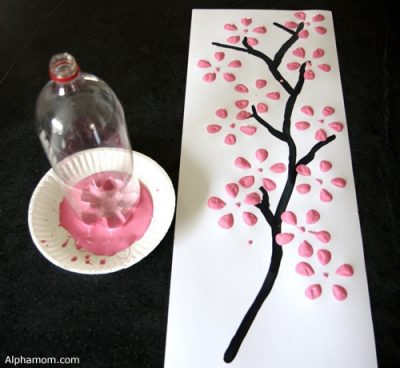
With all the soda bottles stocked up, you would surely have one bottle to spare to create your own Cherry Blossom art.

Make cherry blossom artwork with a recycled 2-liter soda bottle as a stamp! Here are the detailed instructions.

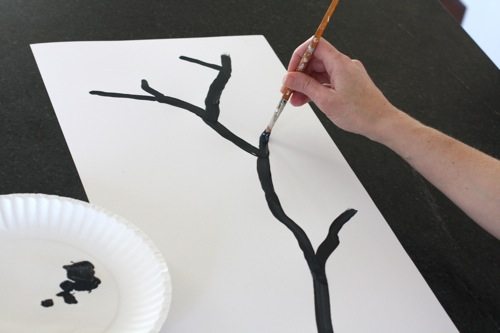
Start by using dark paint to paint a branch on poster board. Branches are easy to paint. If you can’t paint in a straight line, it looks even better.

Cherry Blossom Art Made with Soda Bottle | alphamom.com

I cut this piece of poster board in half lengthwise because I want it to look more like an art panel than a poster.

Once the branch is painted, let it dry before continuing with the stamping.

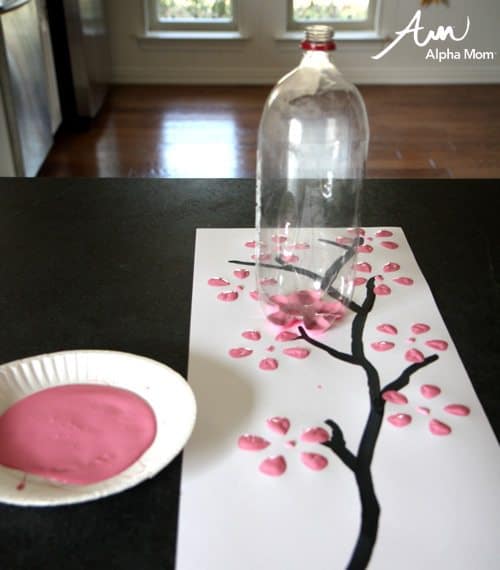
Now let’s do the stamping. Pour some paint on a paper plate and dip the plastic bottle.

Cherry Blossom Art Made with Soda Bottle | alphamom.com

The bottom of 2-liter soda bottle has five points like the five petals of a cherry blossom.

Cherry Blossom Art Made with Soda Bottle | alphamom.com

Press the plastic bottle on the poster board, then lift up. Dip the bottle in more paint each time you repeat the stamp. This is really fun, add as many blossoms as you want.

Cherry Blossom Art Made with Soda Bottle | alphamom.com

3. Lucky Star with Ten Red Packets 

Your banks and supermarkets have given you more than enough red packets. What do you do with them? Make Lucky Stars, of course!


Source: http://chinesenewyearlanterns.blogspot.sg

4. Paper cutting Candle Holder

chinese new year paper cuts

Finding easy patterns to cut out is no easy task! Hopefully these links will help you:

CLICK HERE and HERE

5. Ang Pow Fan

This Ang Pow Fan is made using only 10 red envelopes. It is also easy to make as a decoration or gift to friends and relatives during Chinese New Year. The materials required are as follow:

1) 10 Red packets (Ang Pow)
2) Red string about 30 cm
3) one tassel (or thin strips of paper)
4) UHU glue or double sided tape
5) A pair of scissors (optional, in case you need to cut a ball of red string)


Here's is a step by step tutorial the contributor made and uploaded to share with you


Source: http://chinesenewyearlanterns.blogspot.com/

If craft is not your thing, getting new lanterns, new plants and arranging mandarin oranges into pyramids work too! (Cats add the cute factor!)

Image result for mandarin orange pyramid

Gong Xi Fa Cai! May the Year of the Goat bring you lots of properity!

5 Last minute Chinese New Year DIY decor

Rooms cleaned, curtains washed and hung, stuff that you have been hoarding for the past year has now been discarded. Food supply bought a...


Best Events Blog © 2015 - Blogger Templates Designed by Templateism.com, Plugins By MyBloggerLab.com